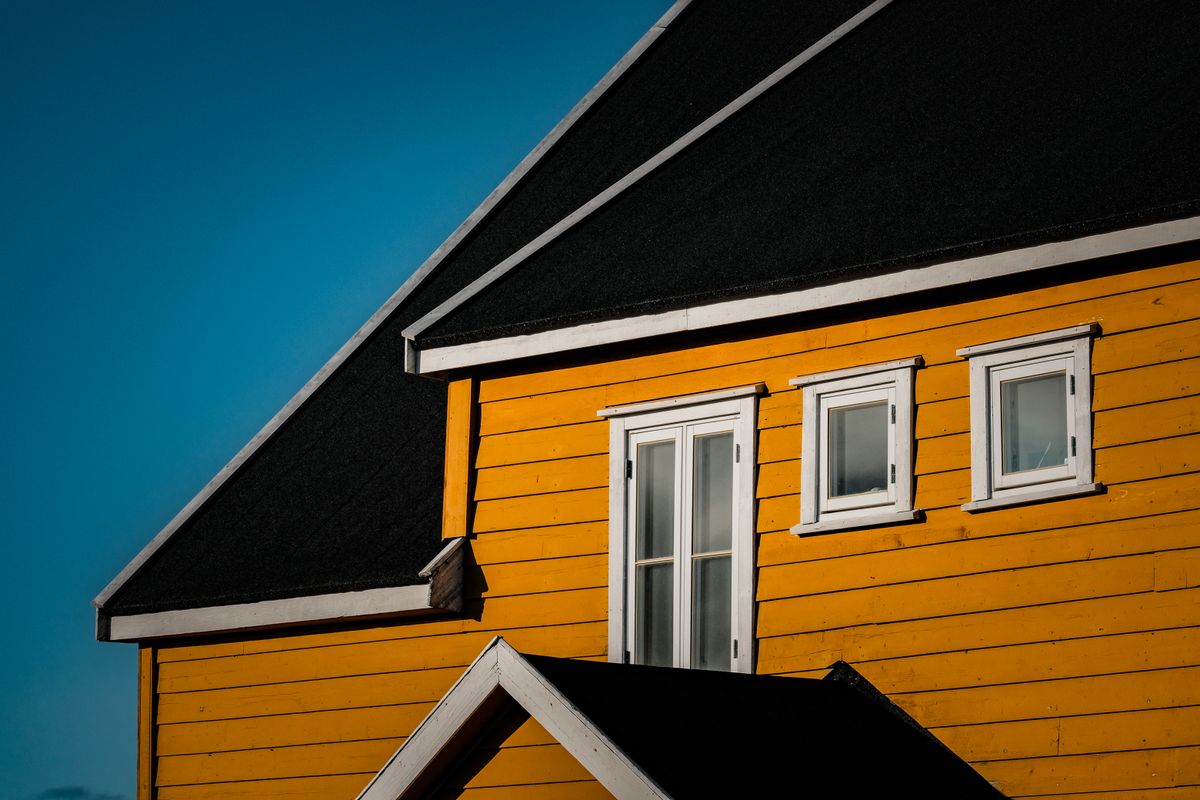
Carolina Forest is not one kind of house, and that matters more for a house wash than people expect. The older sections are vinyl throughout; newer streets are largely painted fiber cement, often with stucco on the front elevation. Vinyl takes a soft wash easily. Painted fiber cement is more particular, because the detergent has to do the cleaning and the dwell has to be watched, and an aggressive rinse on a chalking painted surface takes finish off along with the algae. We look at what the house is actually made of before deciding how to clean it.
The other local reality is the appearance covenant. Most of these communities carry one, and notices tend to go out once the shaded elevation has gone visibly green, which on a light-colored house happens well before the owner notices anything from the driveway. Soft washing the whole envelope, siding, trim, soffits and the porch framing, is normally what closes that out.
We cover Forestbrook from this page as well. It sits immediately south along Forestbrook Road with an older and more mixed housing stock than the planned sections, more brick and more mature tree cover, and the shaded-wall growth there tends to be heavier for exactly that reason. Whether you call it soft washing, house washing or power washing, on siding it is the same low-pressure job, and the pressure stays off the house.
What actually grows on a wall out here, and why the shade side goes first
Carolina Forest was cut out of loblolly pine, and enough of that canopy was left standing that plenty of these houses never get a full day of direct sun on at least one elevation. That is the whole story behind the green film. Algae and mildew do not care how dirty a wall is; they care how long it stays wet. A north or east wall under a closed pine canopy can hold overnight humidity until mid-morning through most of the winter, so it goes visibly green while the sunny front of the same house still looks fine two or three years longer.
Practically, that means a whole-house wash at one uniform price is often not how the money should be spent. It is normal here for one side to need a full soft wash while the front only needs a rinse and the trim detailed. We would rather say that on the walk than sell four elevations of work when the house needs one and a half.
Pine does three separate things to a house and only one of them is algae
Pollen is the one everybody notices: a yellow-green film in late March and April that coats siding, screens, porch rails and cars for a couple of weeks. It rinses off. It is also why we tell people not to book for the first week of April, because a house washed at the front of pollen season looks washed for about four days.
Resin is the one people misread. Under an overhanging limb you get scattered hard amber specks that look like a stain and do not lift with the product that takes algae off, because they are not biological. Those become spot work, and on painted fiber cement there is a limit to how aggressive that can get before the finish is the next thing to come off.
Then there is the straw itself. Pine straw beds are the local standard and they are fine, but where the straw is piled against the foundation and up over the bottom course of siding, that band never dries. A stripe of heavy growth along the bottom of an otherwise clean wall is almost always a bed line, and washing it without pulling the straw back a few inches means it returns before the next season is out.
Half the staining out here comes from the irrigation, not the weather
Most of these neighborhoods irrigate off the stormwater ponds or a shallow well rather than city water, and that water carries iron and pond tannin. When a rotor head throws onto the wall instead of the bed, you get a rust or tea-colored band that stops dead at sprinkler height. That band is a mineral deposit, not growth: it needs a different product than the soft wash, it is quoted separately, and on porous surfaces like stucco or unsealed brick it usually lightens rather than clears completely.
The durable fix is not a cleaning at all. It is turning that head down or changing the nozzle so it stops watering the house. We will point out which heads are doing it while we are there, because otherwise the band is back within a season and it looks like the wash failed.
Three different wall systems, sometimes on the same street
The older sections are vinyl and take a straightforward low-pressure soft wash. The newer streets are largely painted fiber cement, where the detergent and the dwell time do the work and the rinse has to stay gentle, because a hard rinse on paint that has begun to chalk takes finish with it. The third is the synthetic stucco front elevation on a lot of the two-story plans here, and it deserves a specific mention: it is a clad system, so what has to be avoided is not only pressure but volume driven into the terminations around windows, trim boards and the base. It gets low pressure, controlled water, and no lance held near a joint.
A crew that quotes all three at the same rate and washes them the same way is telling you something useful about how the job will run.
What a wash will not fix, said before you get a number
Chalked or oxidized paint is a painting job. Once the binder has broken down, cleaning takes off the loose chalk and the color underneath is still uneven, and no amount of pressure changes that.
Iron that has soaked into stucco or unsealed masonry lightens and rarely disappears.
Failed caulk joints, soft trim and rotted sills get worse when they are washed, because water is going into a place that is already taking it. We point those out on the walk and work around them rather than soaking them and leaving you to find it later.
One thing we do not tend to see here is worth saying because it comes up: the black specks that will not scrub off are an artillery fungus, and it lives in beds of shredded hardwood rather than in pine straw. If you have them, ask what is in the beds nearest that wall, because the answer is usually a hardwood bed somewhere close and the durable fix is the bed, not the siding.
Timing, and how the visit runs
Two windows work best. Late April into May, once the pine pollen has finished dropping, is the clean start to the season. Early autumn is the other, after the summer humidity has done its worst and before the holidays. If a covenant letter has already arrived, the deadline on the letter sets the timing rather than the calendar does.
On the day we need a working outside spigot and the gate unlocked, and it helps if patio furniture, grills and door mats are pulled to the middle of the deck. Windows and slider tracks stay closed. Pets stay in. A single-family house here is normally a half day. We pre-wet the plantings, keep them wet while we work and rinse them again at the end, which protects the straw beds and the foundation planting more than any product choice does.